Sniffers Buffet - Stephen Morrison
July 16 – July 31 2026
July 16 – July 31 2026
Lazy Mike presents Sniffers Buffet by Stephen Morrison, from Thursday, July 16, through Friday, July 31.
Working across sculpture, installation, video, and multi media, Stephen Morrison playfully reimagines ordinary objects and scenes through a canine lens. In his practice, the dog functions not merely as an animal or character, but as a conceptual filter through which human desire, emotion, anxiety, and humor come into view. This strategy—what might be called “dogification”—renders familiar objects strange, humorous, and emotionally charged. By drawing viewers in through approachable imagery, Morrison encourages them to reconsider the objects and environments of everyday life.
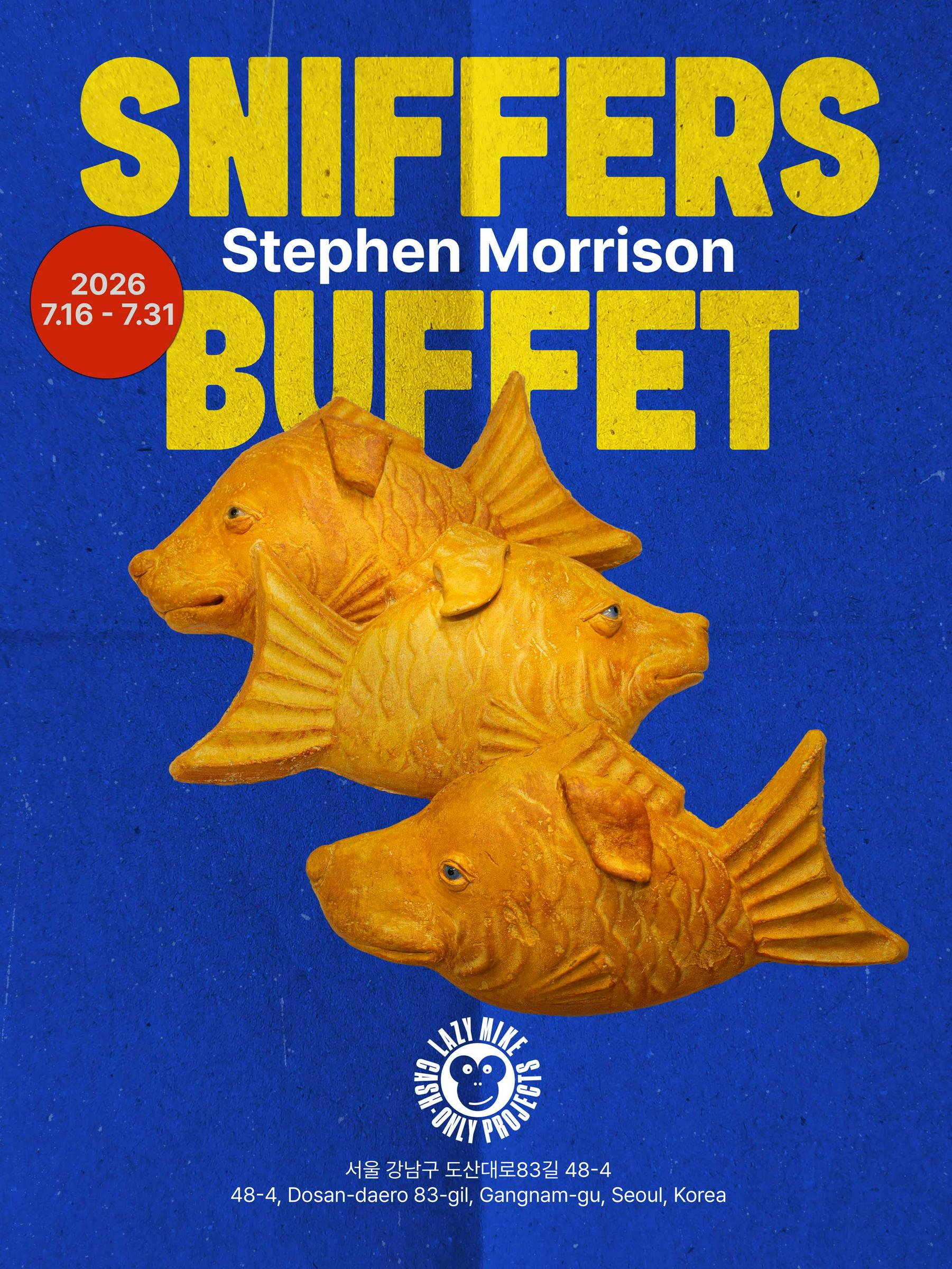
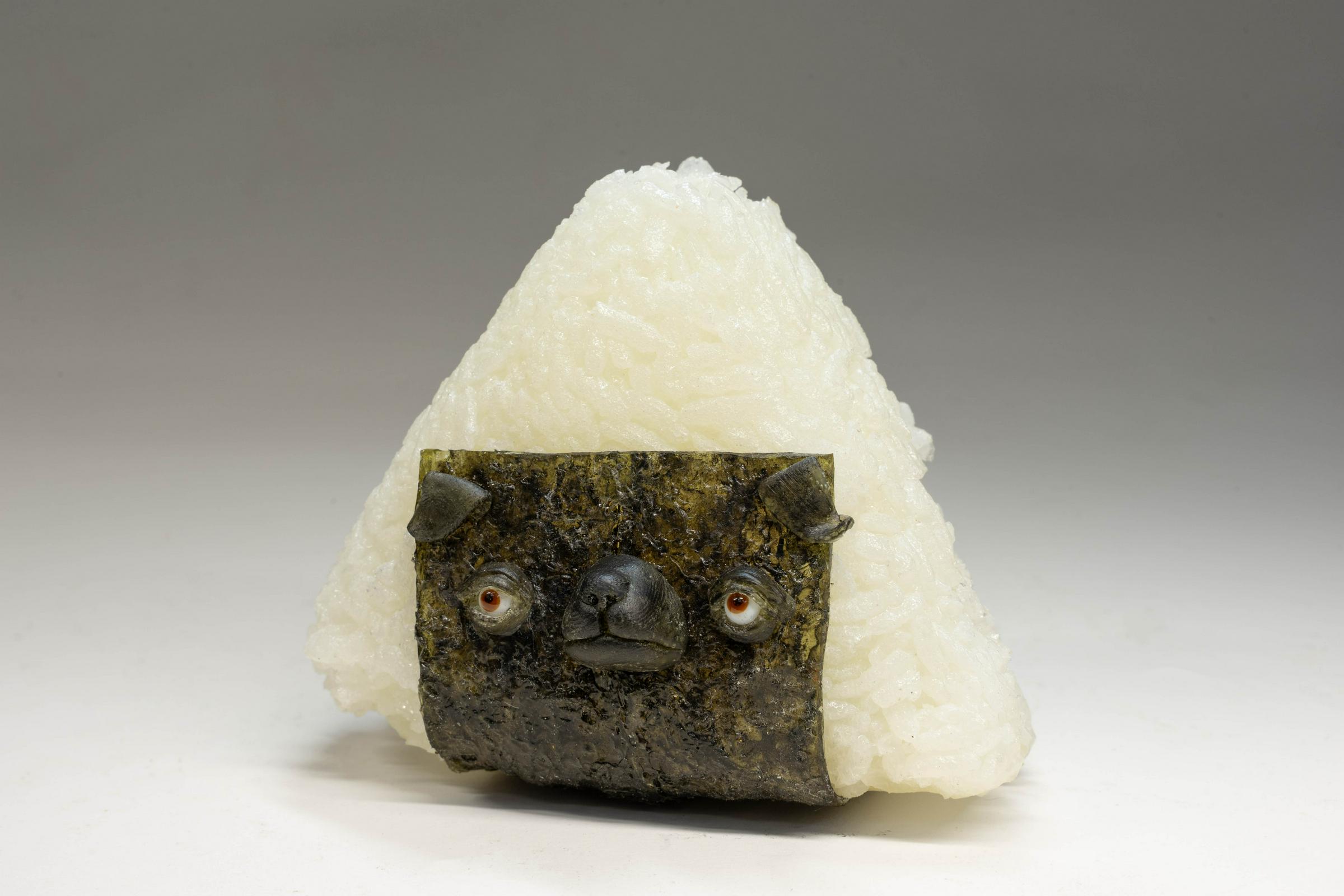
A “sniffer” is one who smells, or who sniffs around in search of something. The word carries a sense of instinct, immediacy, and direct sensory experience, which, in this exhibition, becomes connected to food. Food brings together smell, taste, memory, and habit, while also constituting an everyday experience shaped differently across cultures. In Sniffers Buffet, Morrison observes a new environment through food—a subject that is both universal and distinctly local—and translates it into his canine world. He transforms foods encountered in everyday life in Korea into sculptures, endowing them with canine features and expressions. At first, the works resemble familiar foods, but as viewers approach, they reveal themselves as animated presences with their own expressions and personalities.
The sculptures are arranged throughout the exhibition like a feast table or buffet. Foods commonly encountered in Korea—including triangular gimbap, fried chicken, Korean melon, pear, and twisted doughnuts—are translated into sculptures with distinct forms, surfaces, and textures. Rather than attempting to explain or reproduce Korean food culture, the works emerge from Morrison’s process of translating objects encountered through an outsider’s gaze into his own sculptural language. Each object extends beyond realistic representation, containing a dog’s face within its surface and structure. Viewers first recognize the familiar form of the food and then discover the canine expression concealed within it. Through this encounter, food shifts from an object of consumption into an animated presence capable of emotion and response.
The works also operate as forms of sculptural trompe-l’œil. Morrison recreates the forms and textures of actual objects while inserting impossible faces and expressions into them. The illusion is not simply a technique for achieving realistic representation; it prompts viewers to reconsider objects they believe they already know. Familiarity gives way to estrangement, and the works oscillate between playfulness and unease. Cuteness becomes intertwined with a subtle sense of discomfort, allowing humor to function as a critical method that produces both attraction and distance.
The exhibition also includes documentary footage of Morrison’s earlier installation Dog Show #1: The Dinner Party. In this work, life-size dogs sit around a long dining table, eating, drinking, becoming intoxicated, and collapsing. The social ritual of the dinner party is transformed through canine bodies and expressions into an exaggerated and comic scene. The dogs in the video are not merely cute creatures; they resemble humans driven by desire and impulse, hunger and pleasure.
Through Morrison’s recurring strategies of humor and transformation, Sniffers Buffet demonstrates how familiar objects can acquire new meanings, emotions, and expressions. By endowing objects with canine faces and responsiveness, Morrison prevents viewers from encountering them as mere things. Confronted with the peculiar buffet laid out in the gallery, viewers move between eating and looking, cuteness and strangeness, objects and living beings. Through this canine lens, humor, absurdity, and unease become tools for examining the everyday. Ultimately, an unexpected sense of unfamiliarity emerges from the most recognizable images, opening another way of understanding new objects and environments.